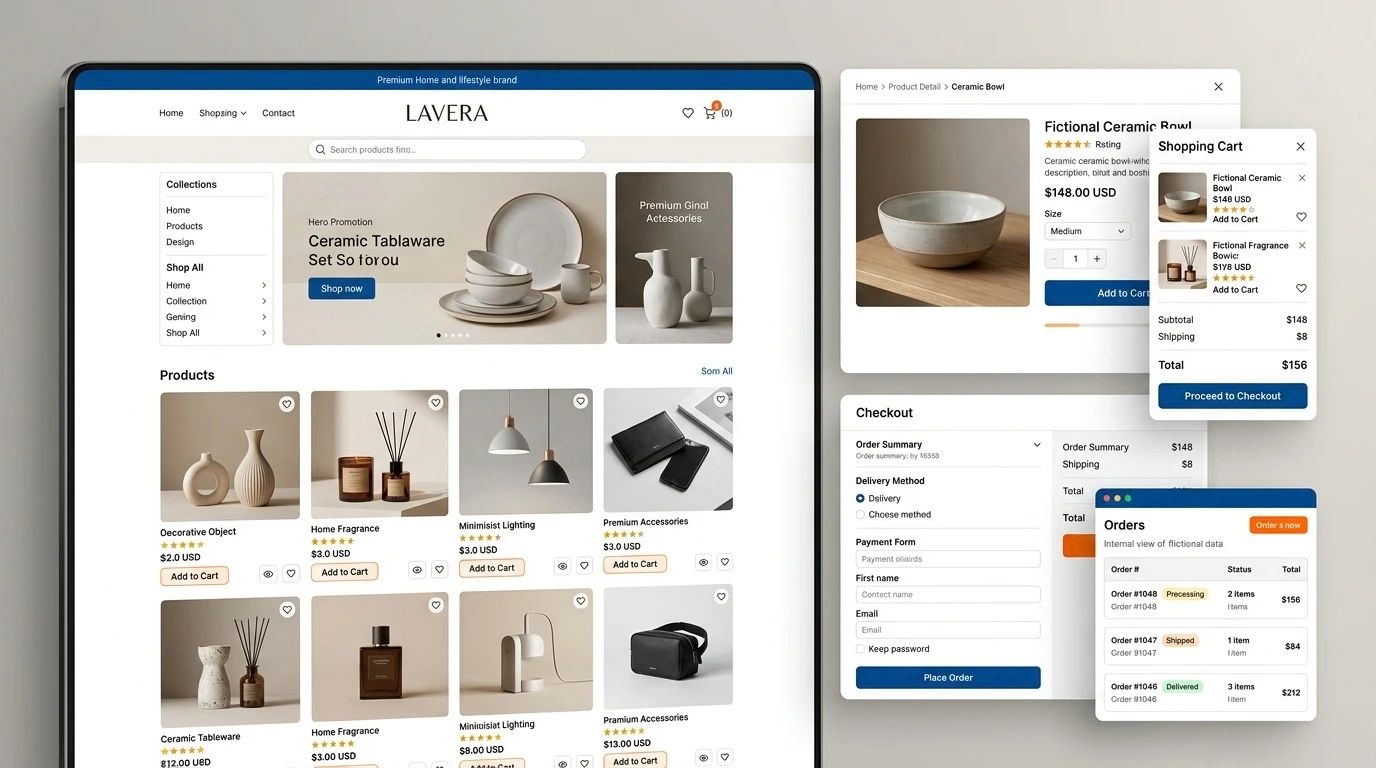
E-Commerce Development in Nepal at a glance
Selling online in Nepal has its own rules. A lot of orders still come through cash on delivery, customers want to pay with eSewa or Khalti, and delivery outside the valley needs different charges and timelines. Most international ecommerce templates don't handle any of that out of the box.
We build stores around how people in Nepal actually buy. Checkout is short and mobile-first, delivery charges calculate by area, order confirmations go by SMS and email, and you get a dashboard that shows what's selling. We also set up product schema so your items can appear in Google with price and stock.
Problems we fix
Checkout drop-off
Long forms, forced account creation and surprise delivery charges make buyers give up at the last step.
Messenger chaos
Selling through DMs works until it doesn't. Orders get lost, stock is guessed, and nobody knows the real numbers.
Wrong delivery fees
One flat fee for Kathmandu and Dhangadhi either loses money or loses customers.
What's included in our e-commerce development service
- Catalogue
- Categories, filters, variations (size, colour), stock tracking and bulk upload.
- Local payments
- eSewa, Khalti, Fonepay QR, cards and cash on delivery.
- Delivery rules
- Charges by zone, free-delivery thresholds and delivery partner integration.
- Guest checkout
- Order in under a minute without creating an account.
- Marketing tools
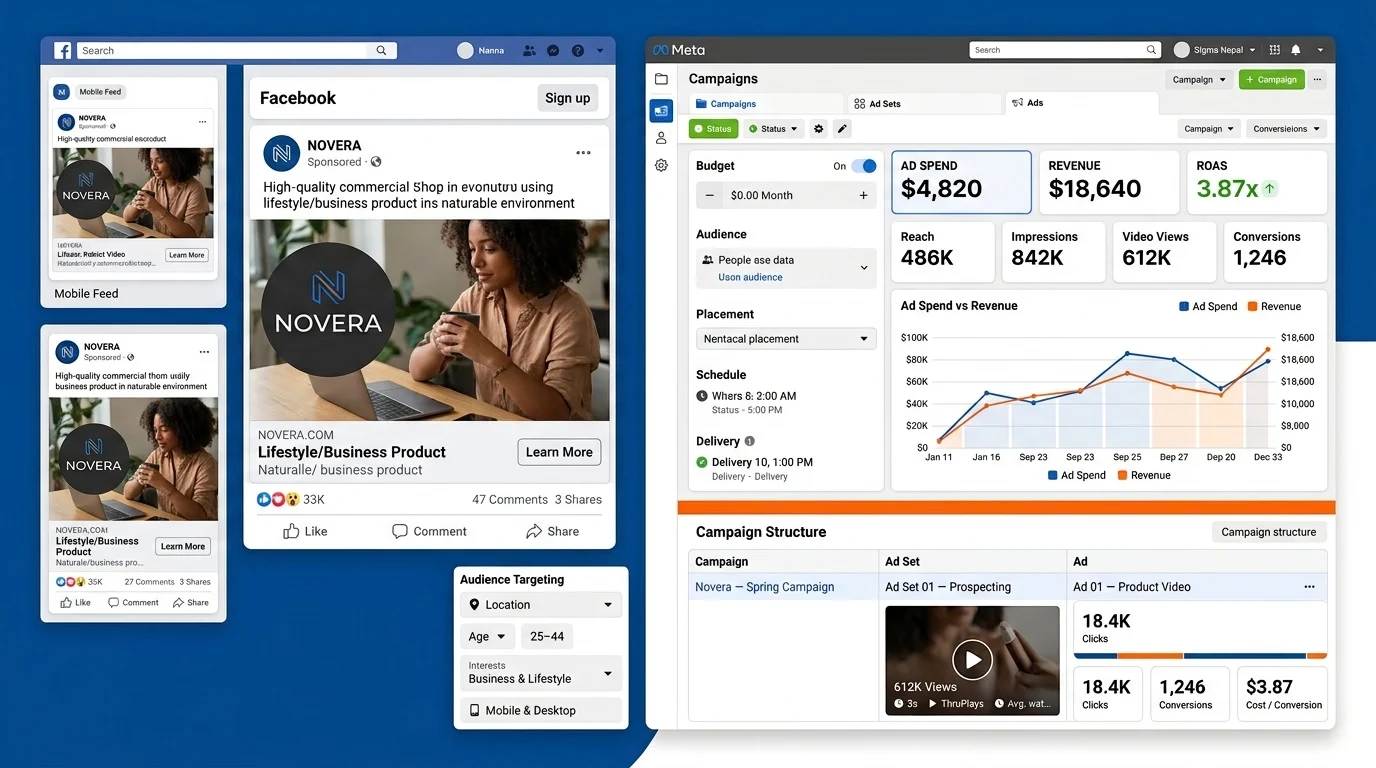
- Coupons, flash sales, abandoned-cart reminders and Meta / Google catalogue feeds.
- Product SEO
- Product schema, clean URLs and unique descriptions so items rank on Google.
What does it take to start an online store in Nepal?
A registered business (PAN or VAT), a store website, merchant accounts with eSewa, Khalti or Fonepay, a delivery arrangement for inside and outside the valley, and a plan to get traffic. The website is maybe a third of the work; payments, delivery and marketing are the rest.
Payment gateways ask for your company registration, PAN or VAT certificate, bank details and a working website with clear refund and delivery policies. We prepare those policy pages as part of the build so your application goes through first time.
For delivery, most stores start with a courier partner for the valley and a logistics company for outside. We can connect the store to partners that offer an API, or give your team a simple order export they can share each morning.
- Company registration and PAN / VAT
- Merchant accounts: eSewa, Khalti, Fonepay
- Refund, delivery and privacy policy pages
- Courier partner inside and outside the valley
- Product photos and descriptions
- Budget for ads in the first three months
Should you use Shopify, WooCommerce or a custom store?
WooCommerce suits most Nepali stores with up to a few hundred products because local payment plugins exist and costs are low. Shopify is easy but local payment options are limited and fees are in dollars. A custom store makes sense when you need special pricing, ERP or POS sync, or very high traffic.
We don't push one platform. If your catalogue is simple and you want to launch quickly, WooCommerce is usually the sensible answer. If you already run a POS or inventory system and need stock to sync in real time, a custom build on Next.js and Node.js avoids fighting a platform that wasn't designed for it.
How do you get sales after the store launches?
Most new Nepali stores get their first sales from Meta ads and Instagram, then build organic traffic through Google with category pages, product SEO and Google Merchant Center listings. Expect to spend on ads for the first three to six months while SEO grows.
We install Meta Pixel with the Conversions API and Google Analytics 4 ecommerce tracking before launch, so from the first rupee of ad spend you can see which products, ads and audiences actually produce orders, not just clicks.
What features does an online store in Nepal need?
Clear product pages with real photos and prices, variants such as size and colour, a cart that shows delivery charges inside and outside the valley, eSewa, Khalti and cash on delivery at checkout, order tracking by SMS or email, and a simple dashboard for stock and orders.
Trust features matter as much as functionality. Many Nepali shoppers still prefer cash on delivery because they've been let down by online sellers before. Showing your phone number, physical address, return policy and real reviews on product pages reduces that hesitation.
On the admin side, plan for how your team actually works. If orders still arrive through Instagram DMs and phone calls, the dashboard should let staff enter those orders too, so stock stays accurate in one place.
- Product variants and stock tracking
- Delivery charges by zone
- eSewa, Khalti, Fonepay and COD
- SMS / email order updates
- Coupons and festival offers
- Admin order entry for phone and DM orders
How much does it cost to run an online store each month?
Beyond the build, budget for hosting (NPR 1,000–5,000 a month for most stores), a small per-transaction fee to each payment gateway (agreed in your merchant contract), delivery costs, SMS credits for order updates, and ad spend to bring visitors.
Payment gateway rates are negotiated with each provider, so confirm them during your merchant application. We help you compare the options and set up the store so that fees and delivery charges are reflected correctly in your prices.
Is e-commerce legal in Nepal, and do you need to register?
Yes. Under the Electronic Commerce Act 2081, online businesses must list with the Department of Commerce, Supplies and Consumer Protection through its online portal, and show their business name, address, registration and PAN/VAT details, a grievance contact and their listing number on the website.
We build these details into the footer and policy pages of every store, and help you prepare what payment gateways ask for. Rules can change, so confirm the latest requirements with the department or your accountant before launch.
How do eSewa and Khalti integrations work on a store?
The customer chooses eSewa or Khalti at checkout, approves the payment in their wallet, and returns to your store. Your server then verifies the payment with the gateway before confirming the order. That last check is what stops fake 'paid' orders.
We integrate eSewa, Khalti and Fonepay, plus cash on delivery, and test success, failure and cancelled payments before launch. Our full guide covers documents and steps.
How do you handle delivery inside and outside the valley?
We set up delivery zones with different charges and times, show them before checkout, and connect your courier partners where they offer an API, or export orders daily for them.
Surprise delivery charges at the last step are one of the biggest reasons people abandon carts. Showing them early costs nothing and saves sales.
Can I manage stock across my shop and website?
Yes. A growth or custom store can keep one stock count for online, phone, Instagram and in-store sales, and alert you when items run low.
Selling something online that's already gone from the shelf is the fastest way to lose a customer's trust. One stock record solves it.
How much does an ecommerce website in Nepal cost?
Our ecommerce websites start at NPR 70,000 for a store with eSewa, Khalti and cash on delivery, and NPR 1,50,000 for a larger store with more features. Custom stores with big catalogues, multi-vendor features or ERP integration start from NPR 3,00,000. Our ecommerce packages and the full breakdown are on this page and in our ecommerce cost guide.
The build is only part of it. Budget for hosting that can handle traffic spikes during Dashain and Tihar sales, payment gateway approvals, product photography, and a few months of ads or SEO to bring the first buyers.
What does ecommerce in Nepal look like in 2026?
Ecommerce in Nepal is growing but still mostly social-first: many shops sell through Facebook, Instagram and TikTok, with cash on delivery. Marketplaces like Daraz take a large share, and more brands now run their own ecommerce websites with eSewa, Khalti and Fonepay to cut commission and own their customer data.
The E-commerce Act 2081 now asks online sellers to register and show their business details, which favours sellers with a proper website and policies. The biggest challenges remain delivery outside the valley, returns and COD refusals; good ecommerce sites in Nepal handle these with clear delivery zones, prepaid discounts and order confirmation by SMS or WhatsApp.
By the numbers
Why shoppers abandon checkout
Top reasons online shoppers give for leaving during checkout. Most are fixable with design: show delivery costs early and allow guest checkout.
View the data
| Item | Value |
|---|---|
| Extra costs too high | 48% |
| Forced to create account | 26% |
| Didn't trust site with payment | 25% |
| Delivery too slow | 23% |
| Checkout too long | 22% |
Ecommerce options for Nepali sellers
| Selling only on Daraz | Shopify | Custom store by Sigma Nepal | |
|---|---|---|---|
| Commission per sale | Yes, platform fee | Monthly fee in USD | None |
| eSewa / Khalti | Platform-controlled | Hard to integrate | Built in |
| Own customer data | No | Yes | Yes |
| Brand control | Low | Medium | Full |
| Ranks on Google as your brand | No | Yes | Yes |
Common mistakes we fix
| Mistake | What we do instead |
|---|---|
| Delivery cost shown only at checkout | Delivery zones and charges shown early |
| No cash on delivery option | eSewa, Khalti and COD together |
| Product photos from suppliers | Your own clear photos and honest descriptions |
| No tracking for ads | Meta Pixel, Conversions API and GA4 ecommerce events |
How we work
- 1Week 1
Store plan
Products, payments, delivery partners and how you'll run orders day to day.
- 2Week 1–3
Design
Home, category, product, cart and checkout designed for phones first.
- 3Week 3–6
Build and integrate
Store development, payment gateway approvals and delivery setup.
- 4Week 6–7
Test orders
We place real test orders with every payment method.
- 5Week 7–8
Launch
Go live, then a 30-day watch on orders and errors.
How much does e-commerce development cost in Nepal?
Starter store
Up to 100 products, one warehouse
NPR 70,000 one-time
- Product + category pages
- Cash on delivery + 1 wallet
- Order dashboard
- Mobile-first checkout
- Product schema
Growth store
Brands selling daily across Nepal
NPR 1,50,000 one-time
- Unlimited products
- eSewa, Khalti, Fonepay, cards
- Coupons + flash sales
- Delivery partner integration
- Abandoned cart emails/SMS
Marketplace / custom
Multi-vendor and B2B ordering
FromNPR 3,00,000 one-time
- Vendor accounts + payouts
- ERP / POS sync
- Mobile app ready API
- Advanced analytics
- Load testing for sale days
Prices in Nepali rupees, excluding 13% VAT. Ad spend paid to Meta, Google or TikTok is billed separately. Every quote is fixed in writing before work starts.
What changes the price
| Factor | How it affects your cost |
|---|---|
| Number of products | Bulk upload helps, but product photos and descriptions take time. |
| Payment gateways | Each gateway needs merchant approval and testing. |
| Multi-vendor | Marketplaces need vendor accounts, commissions and payouts. |
| System sync | Connecting a POS or accounting system adds integration work. |
| Mobile app | An app on top of the store is quoted separately. |
Tools we use
- ReactWeb interfaces
- Next.jsServer-rendered sites
- TypeScriptType-safe code
- Node.jsAPIs and back ends
- LaravelPHP applications
- WordPressContent sites
- WooCommerceOnline stores
- FlutterAndroid and iOS apps
- FigmaUI/UX design
- CloudflareCDN, security, hosting
Want the full picture? See every technology and platform we work with.
Related work
Guides to read next
E-Commerce Development: frequently asked questions
How much does an ecommerce website cost in Nepal?
Our starter stores begin at NPR 70,000. A full store with all local payments, coupons and delivery integration is around NPR 1,50,000. Marketplaces start at NPR 3,00,000.
Which payment gateways work in Nepal?
eSewa, Khalti, Fonepay, ConnectIPS and card payments via banks. Most stores also keep cash on delivery.
Do I need a company registration for payment gateways?
Yes, merchant accounts usually need a registered business, PAN/VAT and a bank account. We help with the technical side.
Can you connect my store with a delivery company?
Yes. We can integrate delivery partners that offer an API, or set up a simple order export.
Should I use Shopify or a custom store?
Shopify is quick but charges in USD and local payments are awkward. A custom or WooCommerce store suits most Nepali sellers better.
Can my products show on Google Shopping?
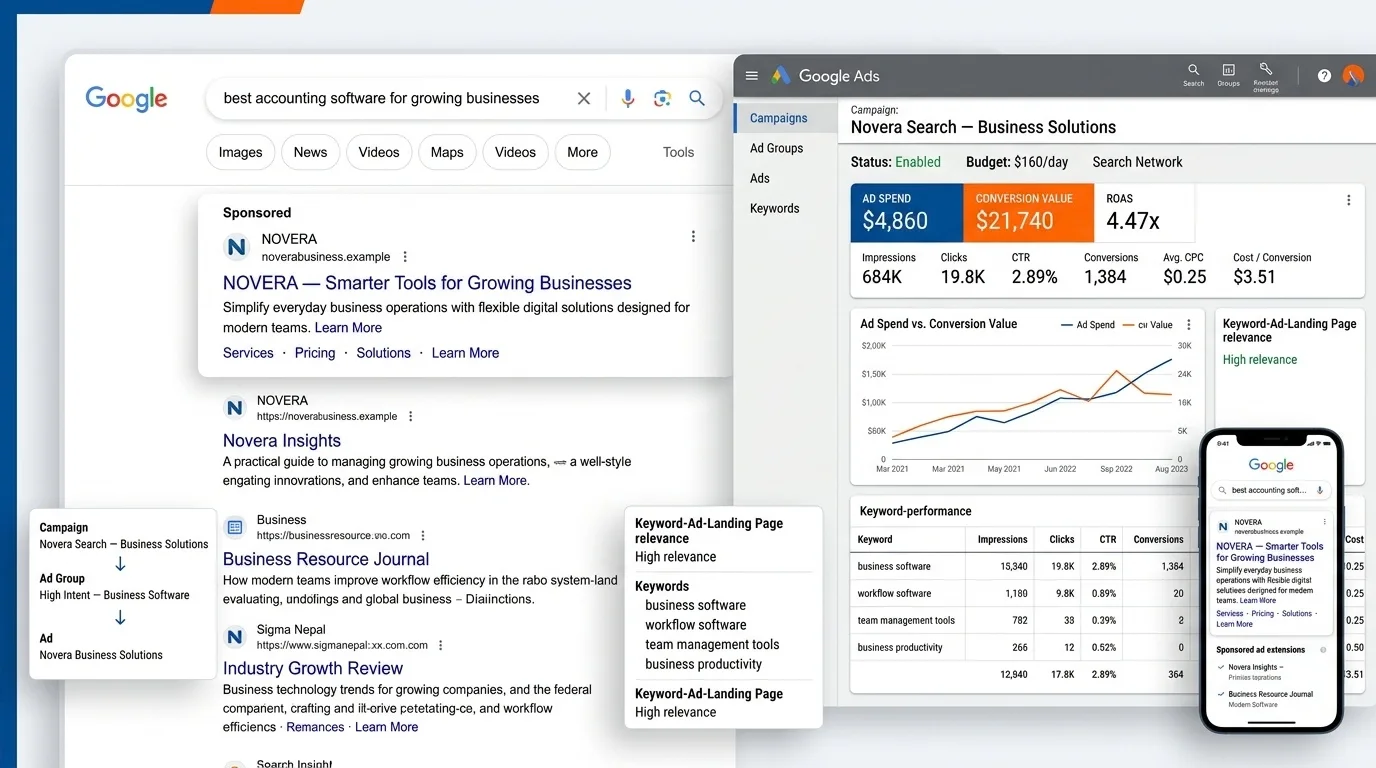
Yes. We set up product schema and a Merchant Center feed.