App Development in Nepal at a glance
In Nepal, Android is the clear majority of phones, so an app has to work well on a mid-range Android handset with patchy data, not just on a new iPhone. That shapes everything: image sizes, offline behaviour, how fast the first screen loads.
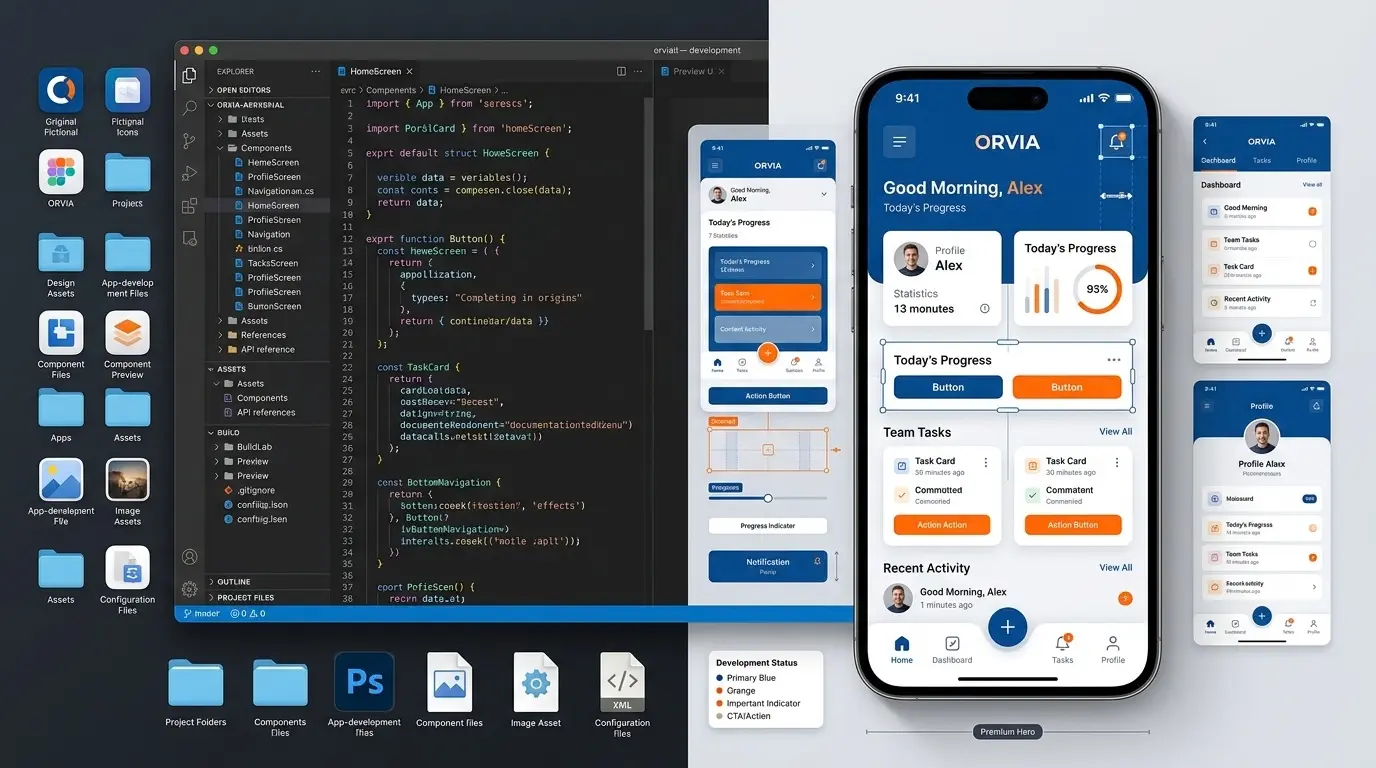
We build apps with Flutter or React Native, so one codebase runs on both Android and iOS. That keeps the cost down without cutting quality. Before writing code we prototype the main screens and test them with a handful of real users, because the cheapest change is the one you make before development.
Problems we fix
Too many features
Version one tries to do everything, runs out of budget and never launches.
Slow on real phones
Apps tested only on flagship phones stutter on the budget Android handsets most Nepalis use.
Launch and forget
No analytics, no crash reports and no update plan after the app goes live.
What's included in our app development service
- Product scoping
- We cut the feature list to what's needed to test the idea with real users.
- UI/UX design
- Figma prototypes tested before development starts.
- Cross-platform build
- One Flutter or React Native codebase for Android and iOS.
- Backend and admin
- APIs, database and an admin panel to manage users and content.
- Payments and notifications
- eSewa, Khalti, push notifications and SMS OTP.
- Store launch
- Play Store and App Store listings, screenshots and review handling.
How much does it cost to make an app in Nepal?
A simple Flutter app for Android and iOS with a handful of screens starts around NPR 1,50,000. Apps with user accounts, payments, notifications and an admin panel usually cost NPR 3,50,000–7,00,000. Marketplaces, delivery or ride-hailing apps cost much more because they're really three apps in one.
The biggest cost driver isn't the number of screens, it's the back end: logins, payments, real-time updates and the admin panel your team uses to manage everything. Get clear on what the admin side needs early, because it's often forgotten in first quotes.
Budget for running costs too. Hosting, push notifications, SMS for OTP and app store fees add a monthly cost, and you should set aside around 15–20% of the build cost each year for updates as Android and iOS change.
Native or Flutter: which is better for an app in Nepal?
For most business apps, Flutter is the better choice. One codebase runs on Android and iOS, which cuts cost and maintenance, and performance is close to native. Native development makes sense for apps that rely heavily on device hardware, complex animations or the newest OS features.
Since Android dominates in Nepal, we design and test on mid-range Android phones first, including older models with less memory. An app that works smoothly on a NPR 20,000 phone will feel fast everywhere.
Do you need an app, or would a mobile website do?
If customers use your service once or twice, a fast mobile website is usually enough and much cheaper. An app makes sense when people use it weekly or daily, need notifications, offline access, or device features like the camera or location.
We'll tell you honestly if an app isn't worth it yet. Many clients start with a progressive web app that can be added to the home screen, then build a full app once they know people will use it regularly.
How long does it take to build and launch an app?
A simple app takes around 6–10 weeks from design to store submission. Apps with accounts, payments and an admin panel usually take 3–5 months. Google Play review typically takes a few days; Apple's App Store review is usually one to three days but can ask for changes.
We release in stages. A first version with the core features goes to a small group of real users, we fix what they find, then we launch publicly. That catches the problems that only show up on real phones, real networks and real behaviour.
- Discovery and scope: 1–2 weeks
- Design: 2–3 weeks
- Build and admin panel: 4–12 weeks
- Testing with real users: 1–2 weeks
- Store submission and launch: 1 week
What does an app cost to maintain after launch?
Plan for around 15–20% of the build cost each year, plus server, SMS and notification costs. Android and iOS update every year, libraries need security patches, and store policies change, so an app that isn't maintained eventually stops working or gets removed.
Our maintenance plans cover OS updates, security patches, crash monitoring and small improvements, with a set number of hours each month. You can also take maintenance in-house; we hand over the code and documentation either way.
How much does each type of app cost in Nepal?
It depends mostly on the back end. A simple informational or catalogue app starts around NPR 1,50,000. Booking and ecommerce apps usually cost NPR 3,50,000–7,00,000. Food delivery, ride-hailing and marketplace apps cost more because they need separate apps for customers, partners and admins.
- Catalogue / company app: from NPR 1,50,000
- Booking or appointment app: NPR 3,50,000 – 6,00,000
- Ecommerce app with eSewa / Khalti: NPR 4,00,000 – 7,00,000
- Delivery or marketplace app: NPR 7,00,000+
How do you pick the best app development company in Nepal?
Download apps they've published and use them on an ordinary Android phone. Ask who owns the source code and developer accounts, what's included after launch, and how they handle Play Store and App Store rejections. A fixed scope and a written maintenance plan matter more than the lowest price.
Also ask how they test on real devices and slow networks. Many apps that look fine in a demo struggle on a 3-year-old phone on mobile data, which is how a lot of Nepali users will open it.
How do you get people to download and keep using the app?
Give them a reason the website can't: faster reordering, loyalty points, bookings, notifications they want. Then promote it in-store, on social media and by SMS to existing customers, rather than relying on app store search.
Most apps get few downloads from the store itself. Launch planning matters as much as the build: who gets told, how, and what they get for installing.
What happens if the App Store or Play Store rejects the app?
We fix the reasons given and resubmit, which is included in our launch work. Common reasons are missing privacy information, login problems for reviewers, or features that need clearer explanation.
Should you hire an app developer in Nepal or an app development company?
A single app developer in Nepal can build a simple app well, but most business apps also need a backend, an admin panel, design, testing and store publishing. An app development company covers all of those and stays around for updates, which matters because Android and iOS change every year.
If you do hire a freelancer, ask for apps they've published on the Play Store or App Store, and make sure the developer accounts are in your name.
By the numbers
Mobile OS share in Nepal
Approximate share of mobile web traffic in Nepal by operating system. Android dominates, so we test on Android first.
View the data
| Item | Value |
|---|---|
| Android | 92% |
| iOS | 7.5% |
| Other | 0.5% |
Native vs cross-platform apps
| Native (Kotlin + Swift) | Cross-platform (Flutter / React Native) | |
|---|---|---|
| Codebases | Two | One |
| Cost | Higher | About 30–40% lower |
| Performance | Best | Close to native for most apps |
| Time to market | Slower | Faster |
| Good for | Heavy graphics, deep hardware use | Business, ecommerce, booking apps |
Common mistakes we fix
| Mistake | What we do instead |
|---|---|
| App that duplicates the website | Features that need an app: notifications, reorders, offline |
| Tested only on new phones | Testing on mid-range Android and slow networks |
| No admin panel | An admin panel for content, orders and users |
| No budget for updates | Plan 15–20% of build cost a year for maintenance |
How we work
- 1Week 1–2
Scope
Define the core user journey and MVP features.
- 2Week 2–4
Design and prototype
Clickable prototype tested with users.
- 3Week 4–10
Build
App, backend and admin in two-week sprints.
- 4Week 10–11
Test
Testing on low and mid-range Android devices plus iOS.
- 5Week 11–12
Launch
Store submission, analytics and crash reporting.
How much does app development cost in Nepal?
MVP app
Testing an idea with real users
FromNPR 1,50,000 project
- Android + iOS (Flutter / React Native)
- Up to 8 screens
- Login + push notifications
- Admin panel (basic)
- Play Store + App Store upload
Business app
Customer apps for stores, clinics and services
FromNPR 3,50,000 project
- Up to 25 screens
- Payments (eSewa / Khalti)
- Booking or ordering flows
- Analytics + crash reports
- 3 months support
Scale app
Marketplaces, delivery and fintech-style apps
FromNPR 7,00,000 project
- Multiple user roles
- Real-time tracking / chat
- Offline mode
- Security hardening
- Release pipeline
Prices in Nepali rupees, excluding 13% VAT. Ad spend paid to Meta, Google or TikTok is billed separately. Every quote is fixed in writing before work starts.
What changes the price
| Factor | How it affects your cost |
|---|---|
| Number of screens | More screens mean more design, build and testing. |
| User types | Customer + driver + admin apps are effectively three products. |
| Real-time features | Live tracking and chat need extra backend work. |
| Payments | Each gateway adds integration and approval time. |
| Offline use | Syncing data offline is complex but sometimes essential. |
Tools we use
- ReactWeb interfaces
- Next.jsServer-rendered sites
- TypeScriptType-safe code
- Node.jsAPIs and back ends
- LaravelPHP applications
- WordPressContent sites
- WooCommerceOnline stores
- FlutterAndroid and iOS apps
- FigmaUI/UX design
- CloudflareCDN, security, hosting
Want the full picture? See every technology and platform we work with.
Guides to read next
App Development: frequently asked questions
How much does it cost to build an app in Nepal?
An MVP starts around NPR 1,50,000. A full business app with payments and bookings is usually NPR 3,50,000+. Complex apps with multiple user types start at NPR 7,00,000.
How long does app development take?
An MVP usually takes 8–12 weeks from scoping to store launch.
Do you build for both Android and iOS?
Yes. With Flutter or React Native one codebase runs on both.
Can the app accept eSewa and Khalti?
Yes. We integrate both, plus card payments where needed.
Will you publish the app on Play Store and App Store?
Yes. We prepare listings and handle submission under your developer accounts.
What happens after launch?
We offer support plans for bug fixes, OS updates and new features.