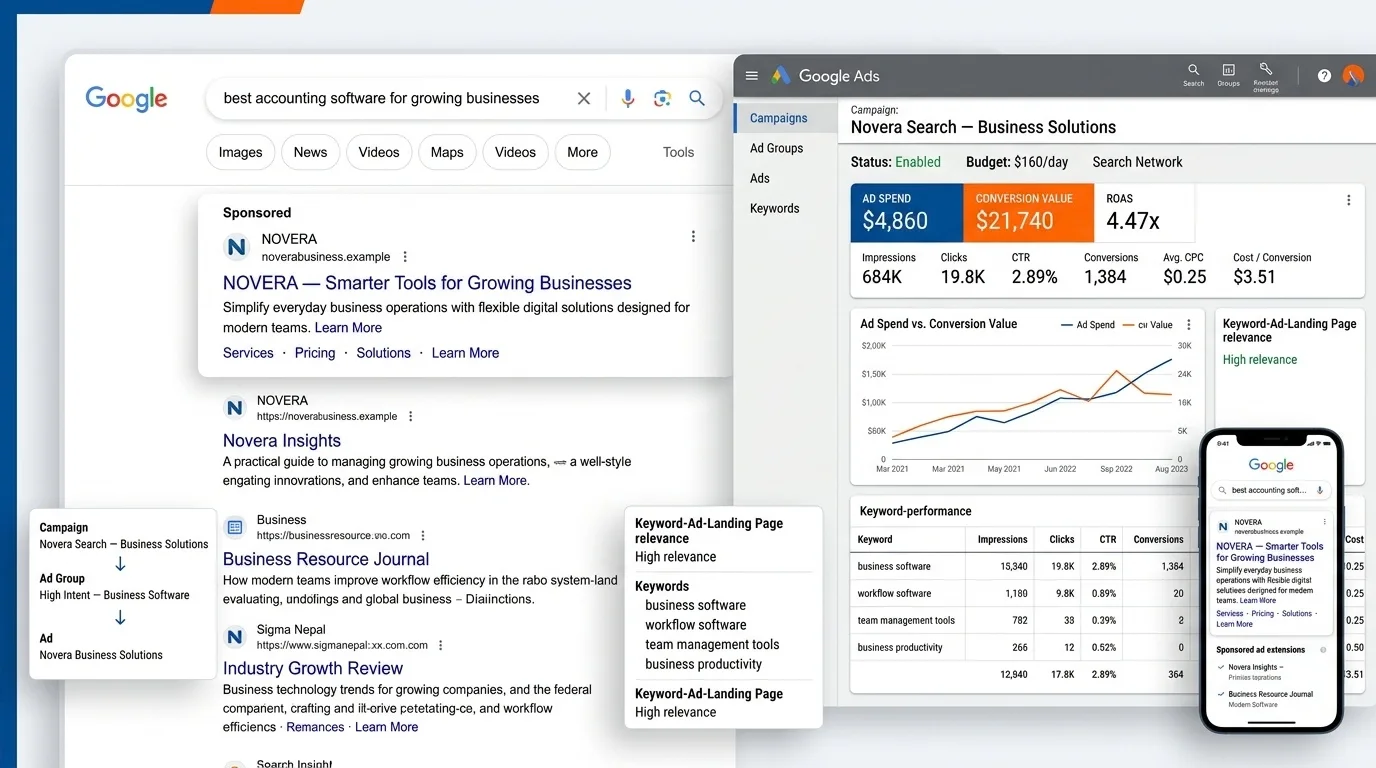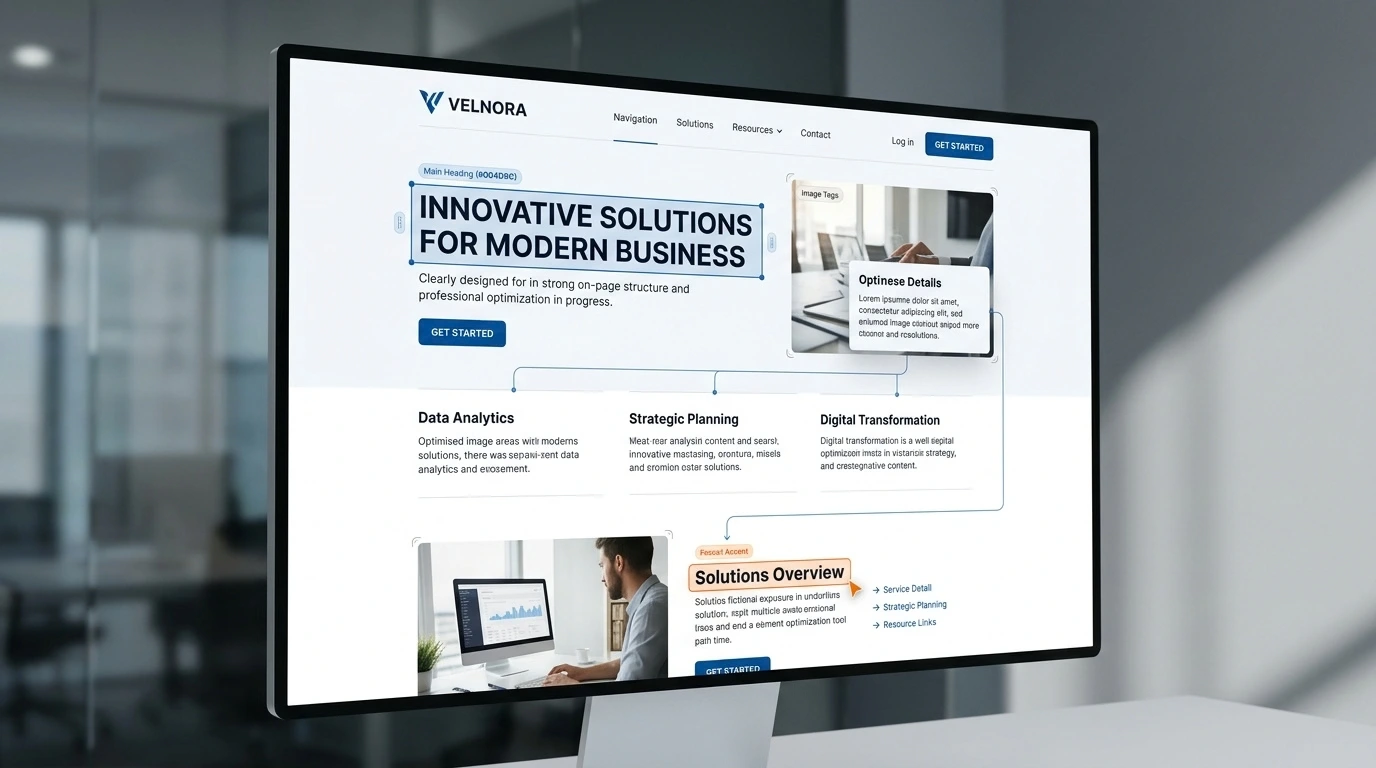

On-page SEO is one of the most important parts of a successful SEO strategy. It helps search engines understand your content while improving the overall experience for visitors. Even the best-looking website won't perform well in search results if its pages aren't properly optimized.
At Sigma Nepal, we help businesses improve their search visibility by optimizing every important element of a webpage—from titles and headings to content, images, internal links, and page speed. Strong on-page SEO creates the foundation for long-term organic growth.
What is On-Page SEO?
On-page SEO is the practice of optimizing individual web pages so they rank higher in search engines and provide a better experience for users. Unlike off-page SEO, which focuses on backlinks and external signals, on-page SEO gives you complete control over your website's optimization.
- Optimize titles and meta descriptions.
- Create high-quality, relevant content.
- Use proper heading structure.
- Improve page speed and mobile usability.
- Optimize images and internal links.

Essential On-Page SEO Checklist
| SEO Element | Best Practice |
|---|---|
| Title Tag | Include primary keyword and keep under 60 characters |
| Meta Description | Write compelling descriptions under 160 characters |
| Headings | Use one H1 and logical H2/H3 hierarchy |
| URL Structure | Keep URLs short and keyword-friendly |
| Images | Compress images and use descriptive alt text |
| Internal Links | Link related pages naturally |
1. Keyword Research & Placement
Every successful page starts with understanding what your audience is searching for. Use your target keyword naturally throughout the page, including the title, headings, URL, opening paragraph, and image alt text without overusing it.
2. Optimize Titles & Meta Descriptions
Your title tag and meta description are often the first things users see in Google Search. Well-written metadata improves click-through rates and helps search engines understand your page's purpose.
3. Use Proper Heading Structure
- Use one H1 per page.
- Organize content with H2 and H3 headings.
- Keep headings descriptive and easy to scan.
- Include keywords naturally where relevant.
4. Create Helpful, High-Quality Content
Google rewards content that genuinely helps users solve problems. Focus on answering search intent with clear, well-structured, and informative content that demonstrates expertise and authority.
5. Optimize Images
- Compress large images.
- Use modern formats like WebP.
- Write descriptive file names.
- Add meaningful alt text.
6. Improve User Experience
Fast-loading pages, responsive layouts, clear navigation, and readable typography all contribute to better user engagement and stronger SEO performance.
Common On-Page SEO Mistakes
| Mistake | Impact |
|---|---|
| Keyword stuffing | Lower content quality |
| Duplicate title tags | Reduced search visibility |
| Missing alt text | Poor accessibility and image SEO |
| Thin content | Lower rankings |
| Broken internal links | Poor user experience |
Why Businesses Choose Sigma Nepal
Sigma Nepal provides complete on-page SEO optimization, including keyword research, content optimization, metadata improvements, technical recommendations, and performance monitoring to help businesses improve search rankings and generate more qualified leads.
Conclusion
On-page SEO is the cornerstone of every successful SEO campaign. By optimizing your content, metadata, headings, URLs, images, and user experience, you create pages that perform better in search engines and provide lasting value to your visitors.