
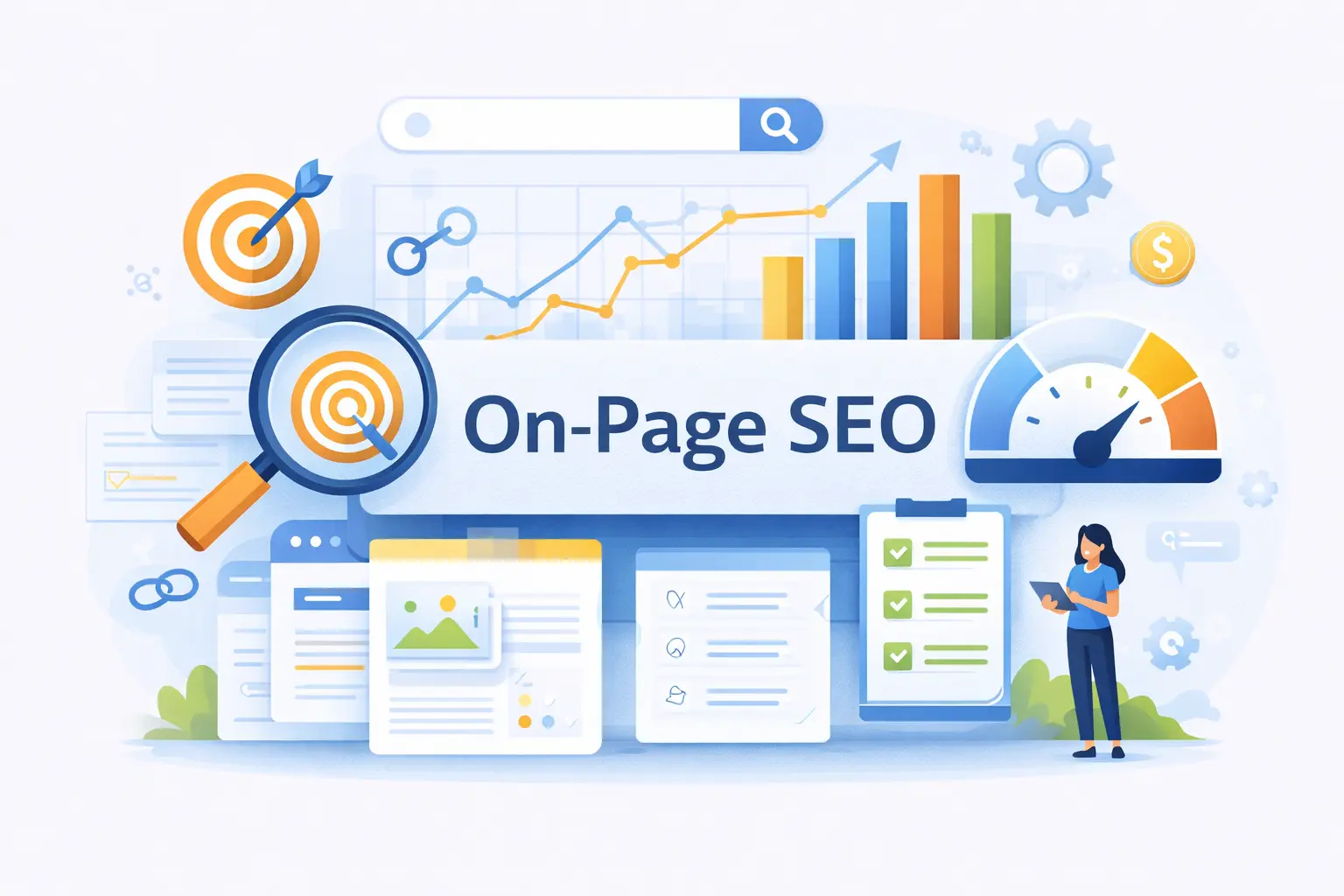
On-Page SEO Optimization: A Complete Guide by Sigma Nepal
On-page SEO optimization is one of the most important parts of SEO & Digital Marketing in Nepal. It helps search engines understand your content and improves your website’s visibility in Google. At Sigma Nepal, we help businesses optimize their websites to rank higher, get more traffic, and convert visitors into customers.
Even if you have a beautiful website, without proper on-page SEO, However, on-page SEO works best when supported by a strong technical foundation. your site may never reach the right audience. In this guide, we’ll explain what on-page SEO is, why it matters, and how you can optimize your web pages step by step.
What Is On-Page SEO Optimization?
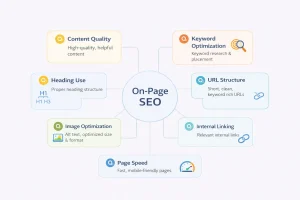
On-page SEO (also called on-site SEO) means optimizing individual web pages to improve their search engine rankings and user experience. It focuses on both content and technical elements of a page, such as:
Page titles and meta descriptions
Headings (H1, H2, H3)
Content quality and keywords
URL structure
Images and alt text
Internal links
Page speed and mobile friendliness
Unlike off-page SEO, on-page SEO is fully in your control and is the foundation of a successful SEO strategy.
Why On-Page SEO Is Important
On-page SEO optimization helps your website:
Rank higher in Google and other search engines
Get more organic traffic
Improve user experience
Increase engagement and conversions
Make your content easier to understand for search engines
Search engines want to show users the best and most relevant results. If your pages are well-optimized, you have a much better chance to appear on the first page.
Keyword Research and Smart Usage
Every successful SEO page starts with the right keyword. Choosing the right keyword is part of building a complete SEO strategy in Nepal. Your main keyword should match what people are searching for and be relevant to your business.
Where to Use Your Focus Keyword
Once you choose your focus keyword, use it naturally in:
The page title
Meta description
URL
Main heading (H1)
First paragraph of content
Subheadings (H2, H3)
Image alt text
At Sigma Nepal, we always recommend avoiding keyword stuffing. Write for users first, not just for search engines.
Optimize Title Tag and Meta Description
Title Tag
Your title tag should:
Be clear and attractive
Include your main keyword
Stay under 60 characters
Example:
On-Page SEO Optimization Guide in Nepal | Sigma Nepal
Meta Description
Your meta description should:
Summarize the page content
Include your main keyword
Encourage users to click
Stay under 160 characters
A good meta description can increase your click-through rate from Google search results.
Use Proper Heading Structure
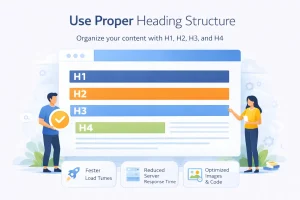
Headings help organize your content and make it easier to read.
Best Practices for Headings
Use only one H1 for the main title
Use H2 for main sections
Use H3 and H4 for sub-sections
This structure helps both users and search engines understand your content better.
Create High-Quality and Helpful Content
Content is the heart of on-page SEO optimization. Google prefers content that is:
Useful and informative
Easy to read
Well-structured
Original and trustworthy
Updated regularly
Your goal should be to solve the user’s problem, not just to rank for a keyword.
Optimize Your URLs
Your URLs should be:
Short and clean
Easy to understand
Include your main keyword
Good Example:
sigmanepal.com/on-page-seo-optimization
Clean URLs improve both SEO and user experience.
Image Optimization (Alt Text & Speed)
Images make your content more attractive, but they must be optimized.
Best Practices for Image SEO
Compress images to reduce file size
Use descriptive file names
Add alt text with relevant keywords
Use modern formats like WebP if possible
This helps improve page speed and also allows your images to appear in Google Image search.
Internal Linking Strategy
Internal links connect your pages together and help:
Users find more useful content
Search engines crawl your site better
Pass SEO value to important pages
For example, you can link this blog to your SEO services or digital marketing service pages.
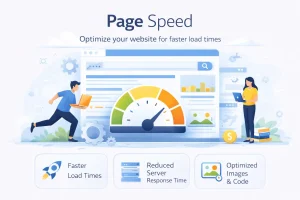
Improve Page Speed and Mobile Experience
Google considers page speed and mobile friendliness as ranking factors.
How to Improve Performance
Make sure your website:
Loads fast
Works well on mobile devices
Uses optimized images and caching
Has a clean and responsive design
A fast website not only ranks better but also keeps users happy.
Use Schema Markup (Optional but Powerful)
Schema markup helps search engines understand your content better and can improve how your site appears in search results, such as showing rich snippets.
Useful Schema Types for Blogs
Article schema
FAQ schema
Breadcrumb schema
Frequently Asked Questions (FAQ)
What is on-page SEO optimization?
On-page SEO optimization is the process of improving individual web pages to rank higher in search engines. It includes optimizing content, titles, headings, images, URLs, and internal links to improve both search visibility and user experience.
Why is on-page SEO important for websites?
On-page SEO is important because it helps search engines understand your content and improves your chances of ranking higher in Google. It also improves user experience, page speed, and content quality, which leads to more traffic and better conversions.
What are the most important on-page SEO factors?
The most important on-page SEO factors include high-quality content, proper keyword usage, optimized title tags and meta descriptions, clean URLs, heading structure, image optimization, internal linking, and fast page speed.
How long does on-page SEO take to show results?
On-page SEO results usually start showing within a few weeks, but significant improvements may take 2 to 3 months depending on competition, content quality, and overall website authority.
Can I do on-page SEO myself or should I hire an agency?
You can do basic on-page SEO yourself using tools like Yoast SEO. However, for better results, strategy, and technical optimization, hiring a professional SEO agency like Sigma Nepal can save time and deliver stronger long-term growth.
Conclusion
On-page SEO optimization is the foundation of successful SEO. Without it, even the best website design or backlinks won’t give you the results you want. By optimizing your content, structure, images, and performance, you make your website more visible, user-friendly, and search-engine friendly.
At Sigma Nepal, we help businesses in Nepal and beyond improve their websites with professional SEO and digital marketing strategies. If you want better rankings, more traffic, and real business growth, on-page SEO is the place to start.